
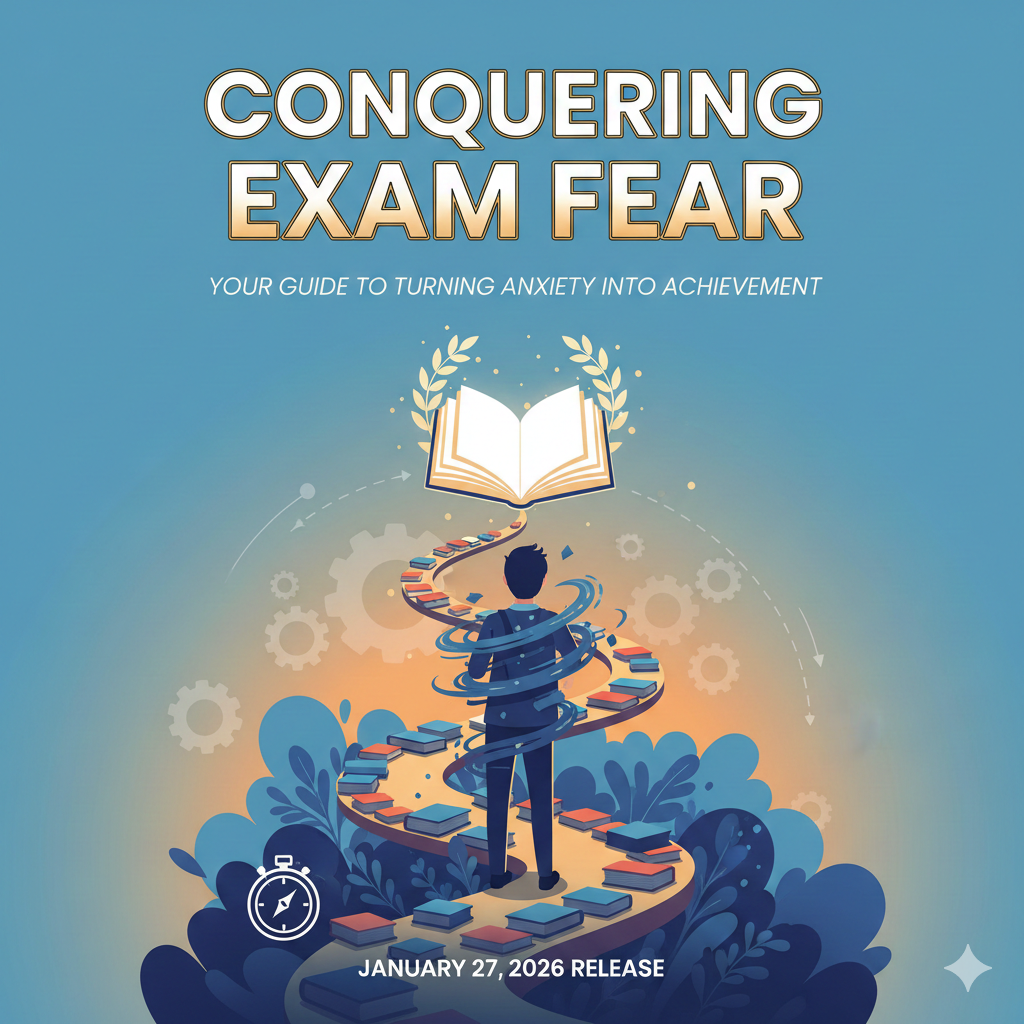

You’re not alone if your heart races at the thought of an upcoming exam, your mind goes blank when you see the question paper, or you lie awake worrying about results. Exam fear is a universal student experience, but it doesn’t have to control you. With the right strategies, you can transform that nervous energy into focused performance.
Understanding Your Exam Anxiety
First, recognize that some anxiety is normal and even helpful. That adrenaline rush can sharpen your focus. Problems arise only when fear becomes overwhelming, triggering panic, mental blocks, or avoidance behaviors. Common triggers include:
- Fear of failure or disappointing others
- Perfectionism
- Lack of preparation
- Negative past experiences
- Comparison with peers
Your Toolkit for Managing Exam Fear
1. Preparation is Your Foundation
- Create a realistic study plan – Break material into manageable chunks with specific goals for each session
- Active learning beats passive reading – Use flashcards, teach concepts to someone else, create mind maps
- Practice under exam conditions – Time yourself with past papers to build familiarity
- Know the format – Understanding the exam structure reduces surprises
2. Mind and Body Connection
- Breathe strategically – When anxious, practice 4-7-8 breathing (inhale 4 seconds, hold 7, exhale 8)
- Move your body – Even 15 minutes of walking can reduce cortisol (stress hormone) levels
- Prioritize sleep – Your brain consolidates memory during sleep; don’t sacrifice rest for cramming
- Mindfulness matters – Try 5-minute meditation apps like Insight Timer or Calm
3. Reframe Your Thoughts
- Challenge catastrophizing – Ask “What’s the realistic worst outcome?” and “How would I handle it?”
- Replace “I must” with “I can” – Swap “I must get an A” with “I’m prepared to do my best”
- Focus on effort, not just outcome – You control your preparation, not the specific grade
- Positive visualization – Imagine yourself calmly entering the exam hall and recalling information
4. Exam Day Strategies
- Arrive early - but avoid last-minute discussions that might increase anxiety
- Skim the entire paper first – This gives your brain an overview and helps with planning
- Start with what you know – Build confidence by answering familiar questions first
- If you blank, move on – Your subconscious will work on it while you answer other questions
- Watch your self-talk – When stuck, think “I can come back to this” instead of “I don’t know this”
5. The Bigger Perspective
Remember: One exam does not define your intelligence, worth, or future. Many successful people failed exams but learned resilience. Your character, creativity, and perseverance matter far beyond any single test score.
When to Seek Help
If anxiety feels unmanageable, causes physical symptoms, or interferes with daily functioning:
- Talk to a trusted teacher or counselor
- Visit your campus wellness center
- Consider speaking with a mental health professional
- Remember that seeking help is a sign of strength, not weakness
You’ve Got This
Exams are a measure of what you know at one moment in time—not a measure of who you are. Your worth extends far beyond a grade. As you prepare, be as kind to yourself as you would be to a friend in the same situation.
Take a deep breath. You have survived every challenging exam so far, and you will navigate this one too. Your education is a marathon, not a sprint—pace yourself, trust your preparation, and remember that growth often happens outside your comfort zone.
Wishing you clarity, calm, and confidence,
Your fellow learner
---
Quick Calm-Down Exercise (60 seconds):
1. Pause and notice 5 things you can see around you
2. Notice 4 things you can feel (your feet on the floor, the texture of your shirt)
3. Listen for 3 distinct sounds
4. Notice 2 things you can smell or like the smell of
5. Take 1 deep breath and exhale slowly
Use this anytime anxiety peaks, even during an exam. You carry calm within you—sometimes you just need to remember how to access it.